
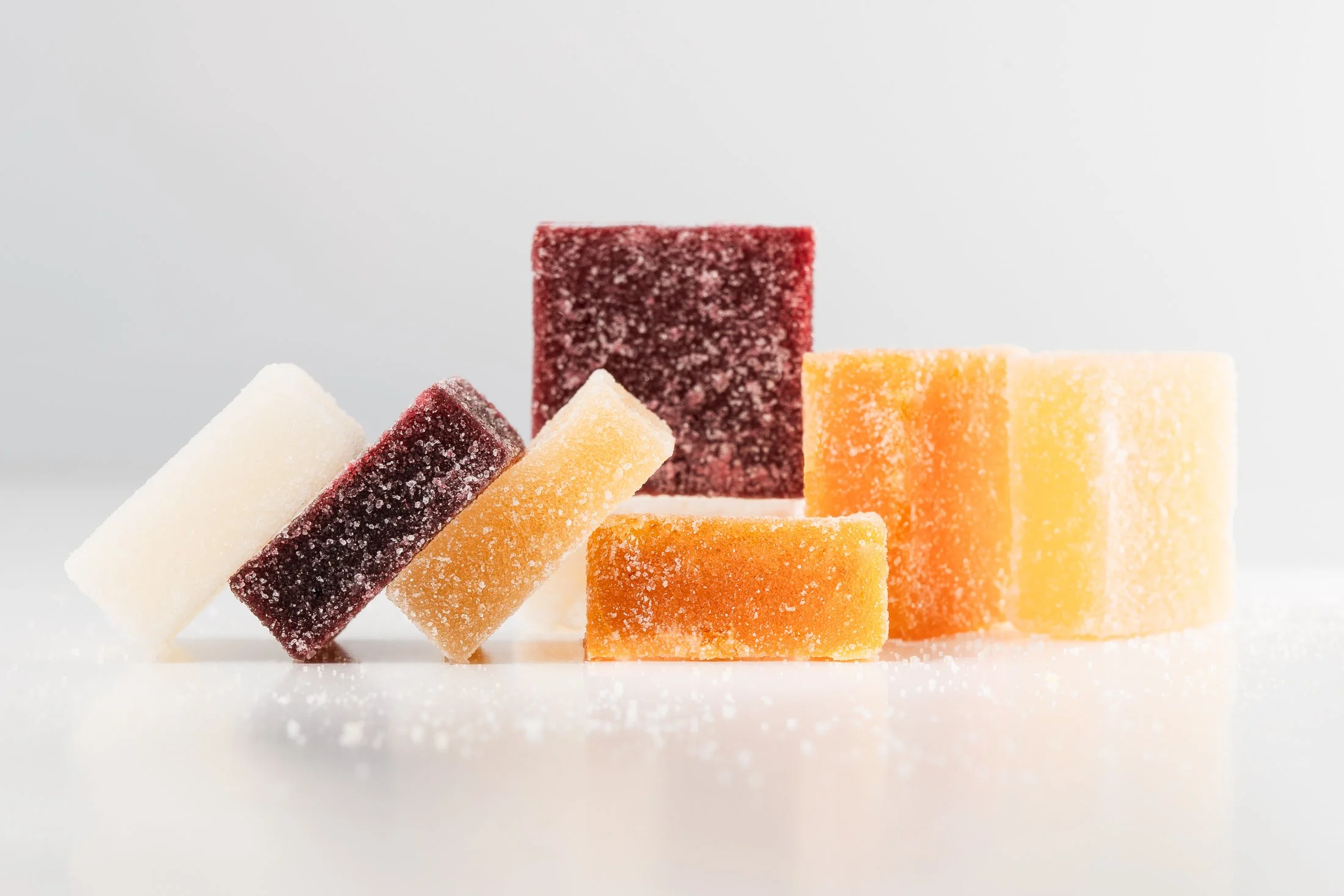
Bright, intensely fruity, and lightly coated in sugar, pâte de fruits may look simple, but it is very different from an ordinary gummy or jelly candy.
Pronounced approximately “paht duh frwee,” this traditional French confection is made by concentrating real fruit purée with sugar and pectin until it develops a soft, tender texture and a remarkably clear fruit flavor.
For anyone who enjoys fruit-forward sweets, pâte de fruits offers something distinctly different from chocolate, caramel, or gummies.
Explore our pâte de fruits and other handcrafted confections made with real fruit purées.
What Is Pâte de Fruits?

Pâte de fruits translates from French as “fruit paste.”
It is traditionally made with:
Fruit purée
Sugar
Pectin
Acid, such as citric acid
The mixture is carefully cooked until it reaches the correct concentration, then allowed to set, cut into individual pieces, and usually finished with a light coating of sugar.
Because fruit purée forms the foundation of the recipe, the finished confection should retain the recognizable flavor, aroma, and acidity of the fruit itself.
Why Does Pâte de Fruits Taste So Fruity?
As the fruit purée cooks, some of its water evaporates and the flavor becomes more concentrated.
The goal is not simply sweetness. A good pâte de fruits should still have enough natural acidity and character for the fruit to be immediately recognizable.
Raspberry should taste distinctly like raspberry. Passion fruit should retain its bright acidity and tropical aroma.
At Jean-Marie Auboine Chocolatier, we use real fruit purées in our fruit-based confections so the flavor begins with the fruit itself.
What Gives Pâte de Fruits Its Texture?
Pectin gives pâte de fruits its characteristic structure.
Pectin occurs naturally in fruit and is also commonly used in jams and preserves. When combined with the proper balance of sugar, acidity, temperature, and fruit purée, it creates a gel that can be cut while remaining tender.
A well-made pâte de fruits should be:
Soft
Smooth
Tender
Easy to bite through
Firm enough to hold its shape
It should not have the stretchy or rubbery chew associated with many gummy candies.
Pâte de Fruits vs. Gummies: What Is the Difference?
This is one of the biggest differences between the two confections.
Pâte de fruits is fundamentally a fruit confection. Real fruit purée is a central part of the recipe and provides much of its flavor and character.
Traditional gummy candies, on the other hand, are generally based primarily on sugar or glucose syrup and gelatin, with flavors and colors added to create the finished candy. Some gummies may contain fruit juice, concentrate, or purée for flavor, but fruit is typically not the main ingredient.
The textures are different too.
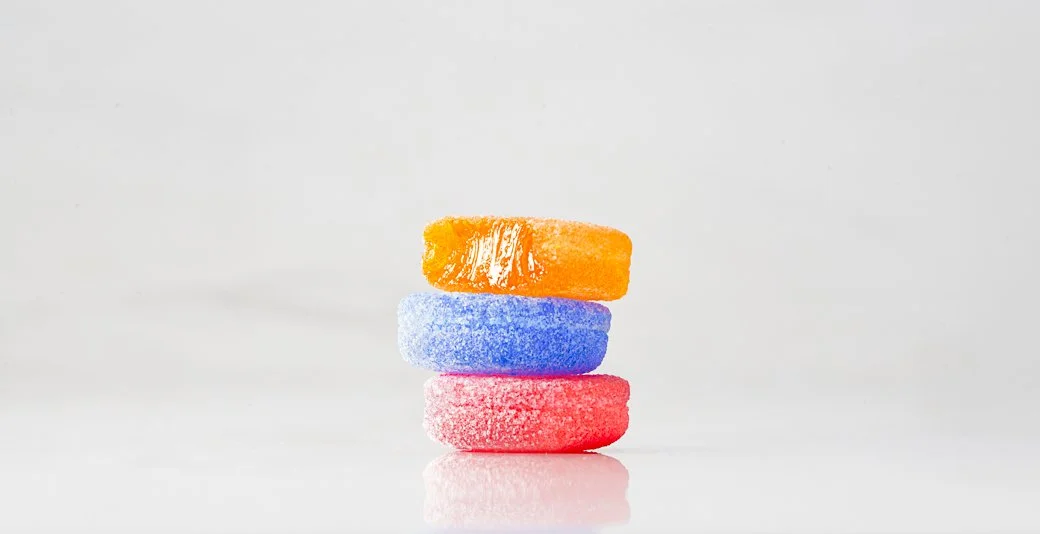
Pâte de Fruits
Made with a significant amount of real fruit purée
Usually set with pectin
Soft and tender
Focused on concentrated fruit flavor
Commonly coated lightly in sugar
Gummies
Usually based primarily on sugar or glucose syrup
Traditionally set with gelatin, although pectin gummies also exist
Firmer, springier, and chewier
Often flavored rather than built around fruit purée
Available in many shapes and textures
Both can be enjoyable, but they are very different styles of confectionery.
Why Real Fruit Purée Matters
Pâte de fruits contains relatively few ingredients, so the fruit has a major influence on the finished product.
Real fruit purée contributes natural:
Flavor
Acidity
Aroma
Color
Fruit character
Different fruits also create very different results. Berries may bring deeper flavor and acidity, while tropical fruits can be brighter and more aromatic.
Sugar is necessary for sweetness, texture, and preservation, but it should support the fruit rather than overpower it.
Is Pâte de Fruits Chocolate-Free?
Traditional pâte de fruits does not contain chocolate, making it an excellent option for someone looking for a fruit-forward confection instead.
It can be enjoyed on its own or paired with richer products such as chocolates, caramels, pralines, macarons, or nougat.
Anyone with allergies or specific dietary requirements should still review the individual product information, since confections may be produced in environments that also handle chocolate, nuts, dairy, and other ingredients.
Is Pâte de Fruits Good for Summer?
Pâte de fruits can be a particularly useful warm-weather treat because it does not melt like chocolate.
It is not completely unaffected by temperature, however. Excessive heat and humidity can soften the confection and make the sugar coating sticky.
For best results, keep pâte de fruits in a cool, dry place away from direct sunlight.
This makes it one of several good alternatives when you want to give a premium confection during warmer months without choosing a traditional chocolate box.
How Do You Enjoy Pâte de Fruits?
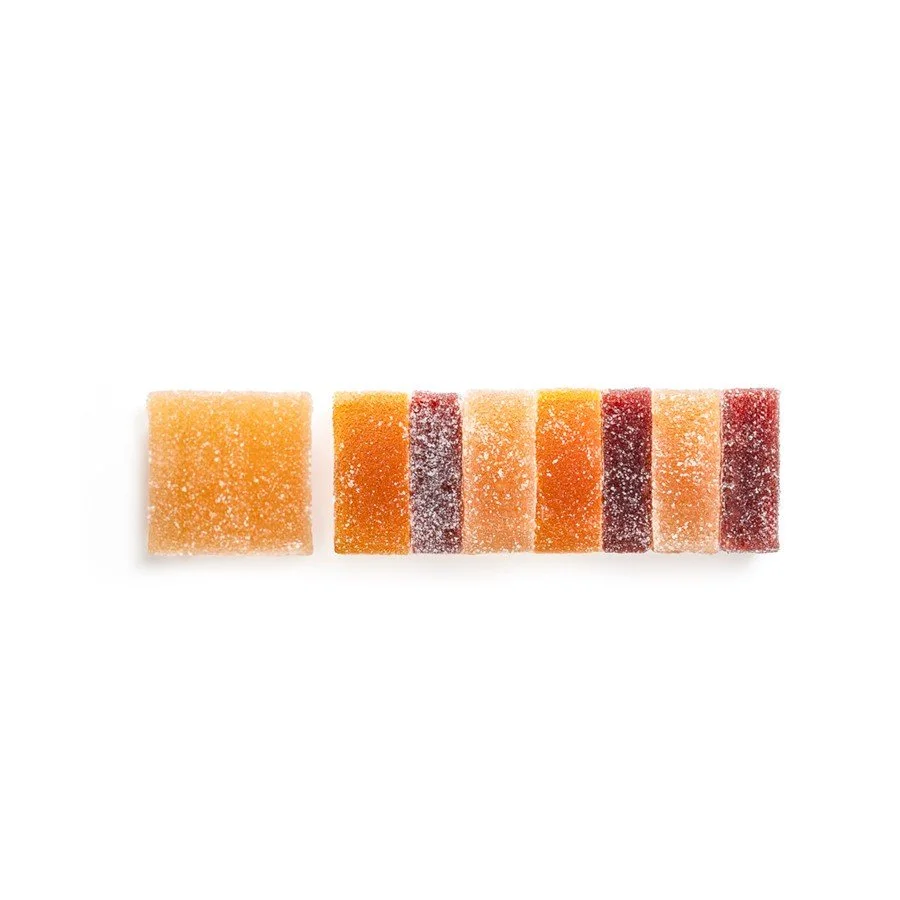
Pâte de fruits can simply be eaten on its own, but it also works well:
With coffee or tea
As part of a dessert selection
Alongside chocolates and other confections
On a hospitality tray
In a gift basket or confection assortment
Because the fruit flavor is concentrated, even a small piece can provide a satisfying finish after a meal.
Its acidity also creates a pleasant contrast with richer chocolates, pralines, and caramels.
Is Pâte de Fruits a Good Gift?
Yes. Pâte de fruits is especially well suited to someone who enjoys fruit-forward flavors or wants to explore classic French confectionery.
It can work for:
Host gifts
Thank-you gifts
Birthdays
Summer gifting
Gift baskets
Office treats
Travelers
Anyone looking for an alternative to chocolate
It can also be paired with chocolate rather than replacing it, creating a gift with more variety in flavor and texture.
What Makes a Good Pâte de Fruits?
A well-made pâte de fruits should have:
A clear, recognizable fruit flavor
Balanced sweetness and acidity
A tender texture
A clean bite
A smooth interior
A light sugar coating
Above all, the fruit should remain the focus.
That is ultimately what separates pâte de fruits from many other fruit-flavored candies. Rather than creating the idea of a fruit flavor, it begins with the fruit itself and concentrates its character into a small confection.
Frequently Asked Questions
Is pâte de fruits the same as a gummy?
No. Pâte de fruits is traditionally made with a significant amount of real fruit purée and pectin, resulting in a soft, tender texture. Gummies are generally based primarily on sugar or glucose syrup and gelatin, with a firmer, springier chew.
Does pâte de fruits contain real fruit?
Yes. Traditional pâte de fruits is made from fruit purée. Jean-Marie Auboine Chocolatier uses real fruit purées in our fruit-based confections.
Does pâte de fruits melt?
It does not melt like chocolate, but excessive heat and humidity can affect its texture and sugar coating. Store it in a cool, dry place away from direct sunlight.
Discover a Different Side of Fine Confectionery
Pâte de fruits combines real fruit, careful technique, and a delicate texture in a deceptively simple confection.
When made well, the result is intensely fruity, tender, and distinctly different from an ordinary gummy or jelly candy.
Explore our pâte de fruits and other premium handcrafted confections, or visit Jean-Marie Auboine Chocolatier in Las Vegas to discover them alongside our chocolates, macarons, nougat, caramels, and more.